
Statistical Comparison: Greece vs. EU
Visibility for Disability in Greece
Public Sector, European Comparison and Best Practices
Many thanks to Alexandros Vargiemezis, Dimitrios Leontaridis, Dionysios Thomopoulos and Nikolaos Chatzopoulos for the social media campaign they created for NOUS under the supervision of Professor Korina Katsaliaki. This work is done as part of requirements for the MBA degree of the International University of Greece.
Executive Summary
Despite robust legislative frameworks such as the National Action Plan for the Rights of Persons with Disabilities (2020) and the ESPeKA Plan (2023), Greece continues to face significant systemic failures regarding the inclusion and rights of persons with disabilities. This report reveals a substantial implementation gap, positioning Greece behind European Union averages across all critical dimensions of social and economic participation.
The current approach in Greece remains divided, resulting in inefficient service delivery, inconsistent policy application and exclusion. While urban centers struggle with overburdened systems, rural and island regions face severe shortages of basic services and infrastructure.
Addressing these challenges is not only a need for social justice but a strategic requirement for national development. To bridge this gap, a fundamental strategic shift is required and adopting established European best practices can provide a clear roadmap for improvement in Greece.
The recommendations within this report provide an actionable
framework for achieving this alignment, fostering a Greek society that is truly
accessible and inclusive for all its citizens.
Introduction
Greece has made significant legislative progress in disability rights, notably through the National Action Plan for the Rights of Persons with Disabilities (2020) and the ESPeKA Plan (2023), which set out strategic goals for accessibility, inclusion and deinstitutionalization (Konstantinidou et al., 2022; National Confederation of Disabled People of Greece, 2019).
Despite these frameworks, implementation gaps persist, especially in accessibility, employment and inclusive education (Konstantinidou et al., 2022; National Confederation of Disabled People of Greece, 2019).
Employment
- Employment rate for persons with disabilities
- 33.9% in Greece (2020) vs. 50.3% EU27 average (Strati, 2021)
- Disability employment gap
- 28 % in Greece vs. 24.5% EU average (Strati, 2021)
- Unemployment rate for persons with disabilities
- 28.6% in Greece vs. 17.1% EU average (Strati, 2021)
- Economic activity rate
- 47.5% in Greece vs. 62% EU average (Strati, 2021)
Women and young people with disabilities are disproportionately affected by unemployment and long-term inactivity (Strati, 2021; National Confederation of Disabled People of Greece, 2019).
Poverty and Social Protection
- Poverty risk rate for working age persons with
disabilities
- 25% in Greece vs. 17.8% for non-disabled Greeks
- EU27 average for disabled: 22.4% (Strati, 2021).
- Material deprivation
- 28% for disabled Greeks vs. 11.3% EU average (Strati, 2021)
- Out-of-pocket health expenditure
- 33.5% of household health spending in Greece vs. 14.3% EU average (National Confederation of Disabled People of Greece, 2023)
- Unmet medical needs
- 29.6% of disabled Greeks report unmet needs due to cost, waiting lists, or distance vs. 5% EU average (National Confederation of Disabled People of Greece, 2023).
Accessibility
- Only 3 in 10 disabled people rate public health infrastructure as «good» or «very good» for accessibility (National Confederation of Disabled People of Greece, 2023).
- Barriers are more acute in rural/island regions (Aegean, Ionian, Epirus, Western Macedonia) (National Confederation of Disabled People of Greece, 2023).
Education
- Early school leaving
- 8.2% for disabled youth (18–24) in Greece vs. 2.7% for non-disabled (Strati, 2021)
- Tertiary education completion
- 24.3% for disabled (30–34) vs. 44.3% for non-disabled (Strati, 2021).
- Inclusive education
- Most disabled students attend mainstream schools, but only 10% receive parallel support
- Many are in segregated classes (European Agency for Special Needs and Inclusive Education, 2023; Strati, 2021).
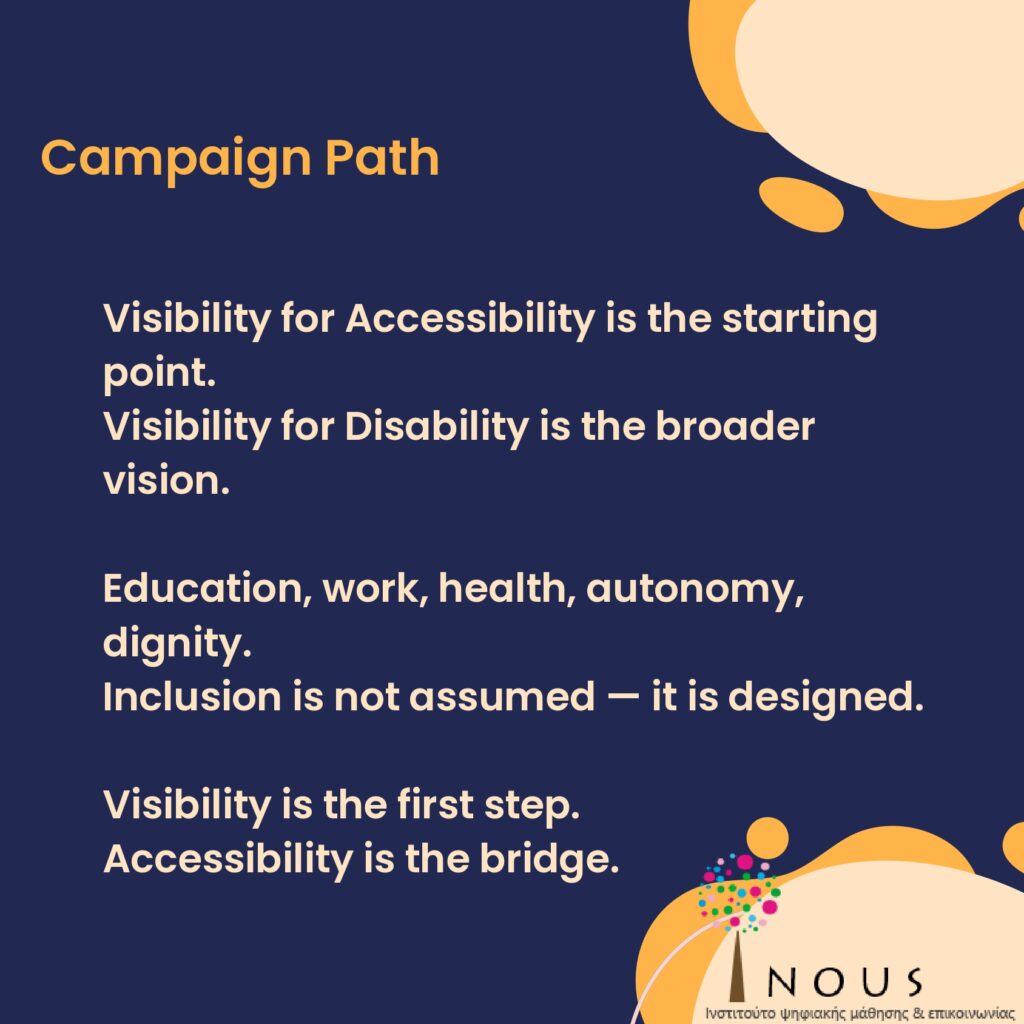
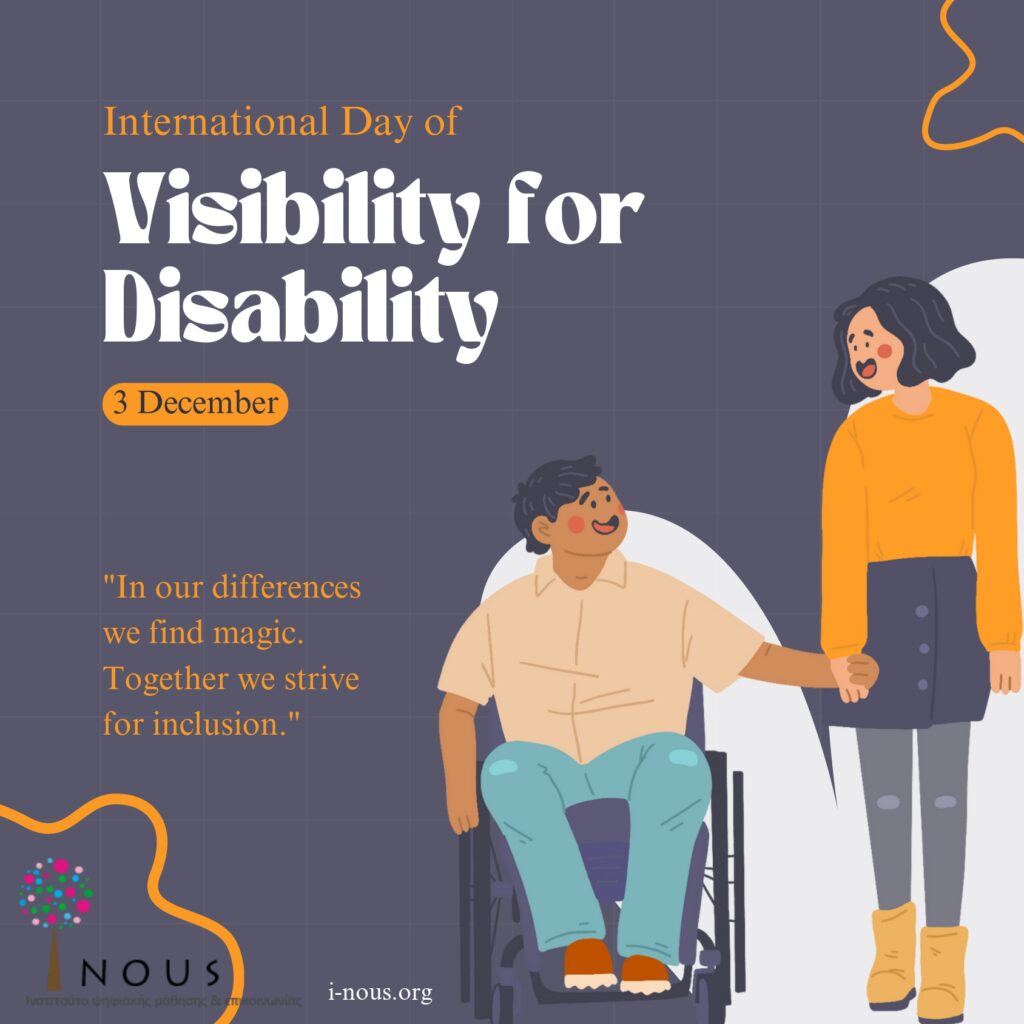
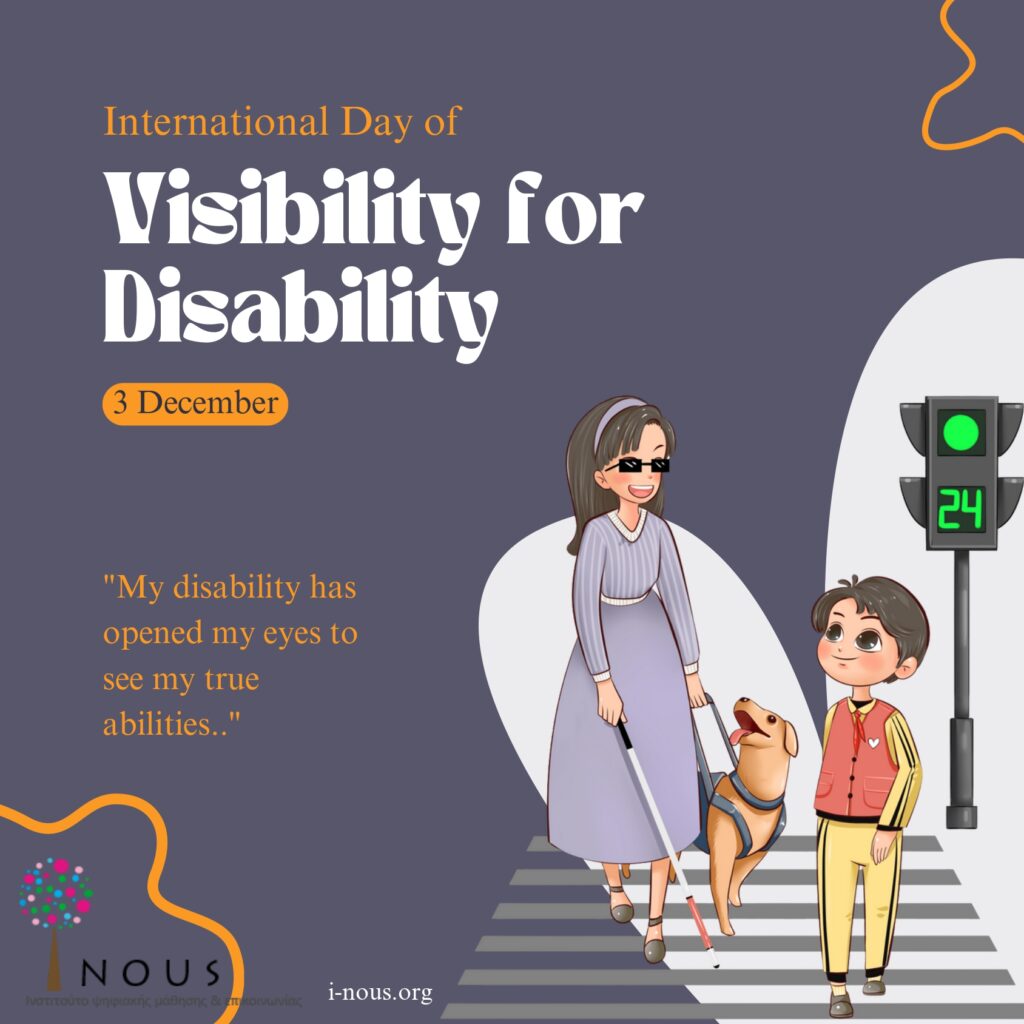
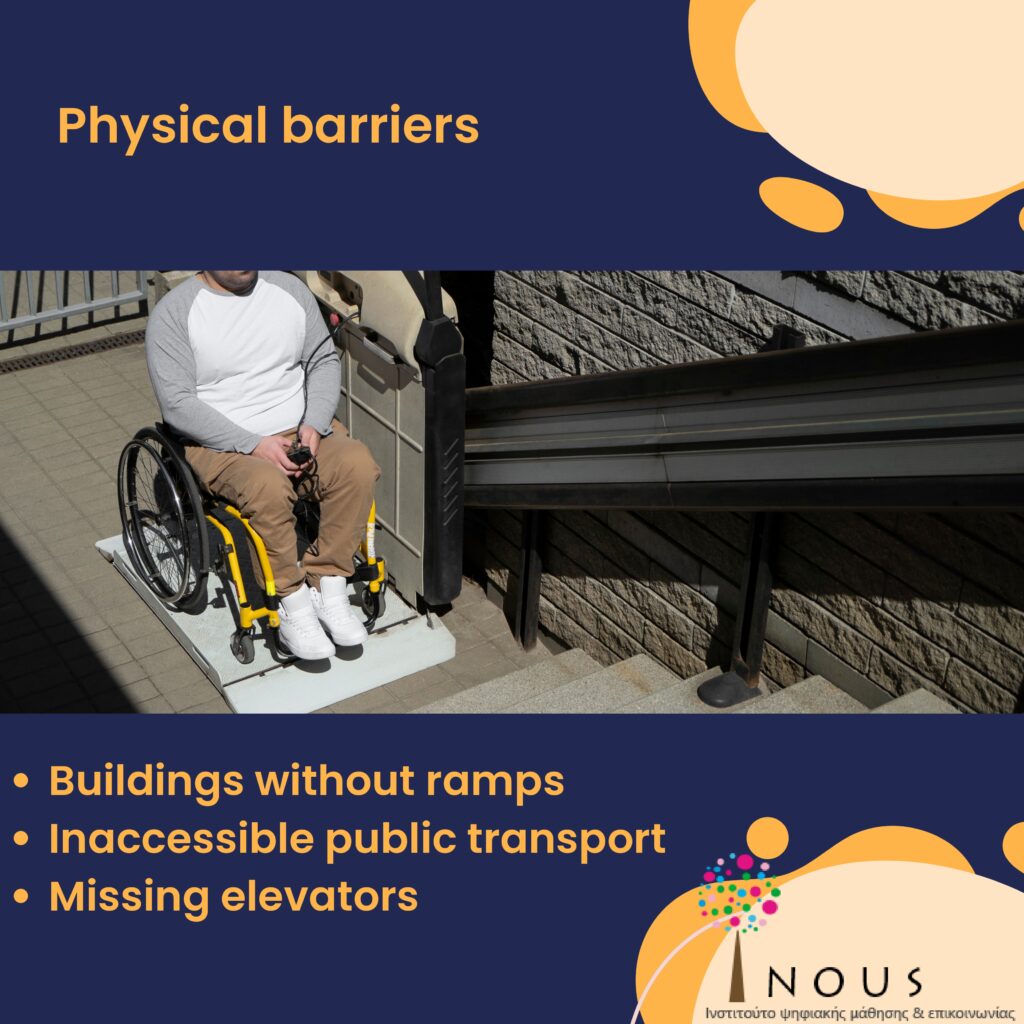
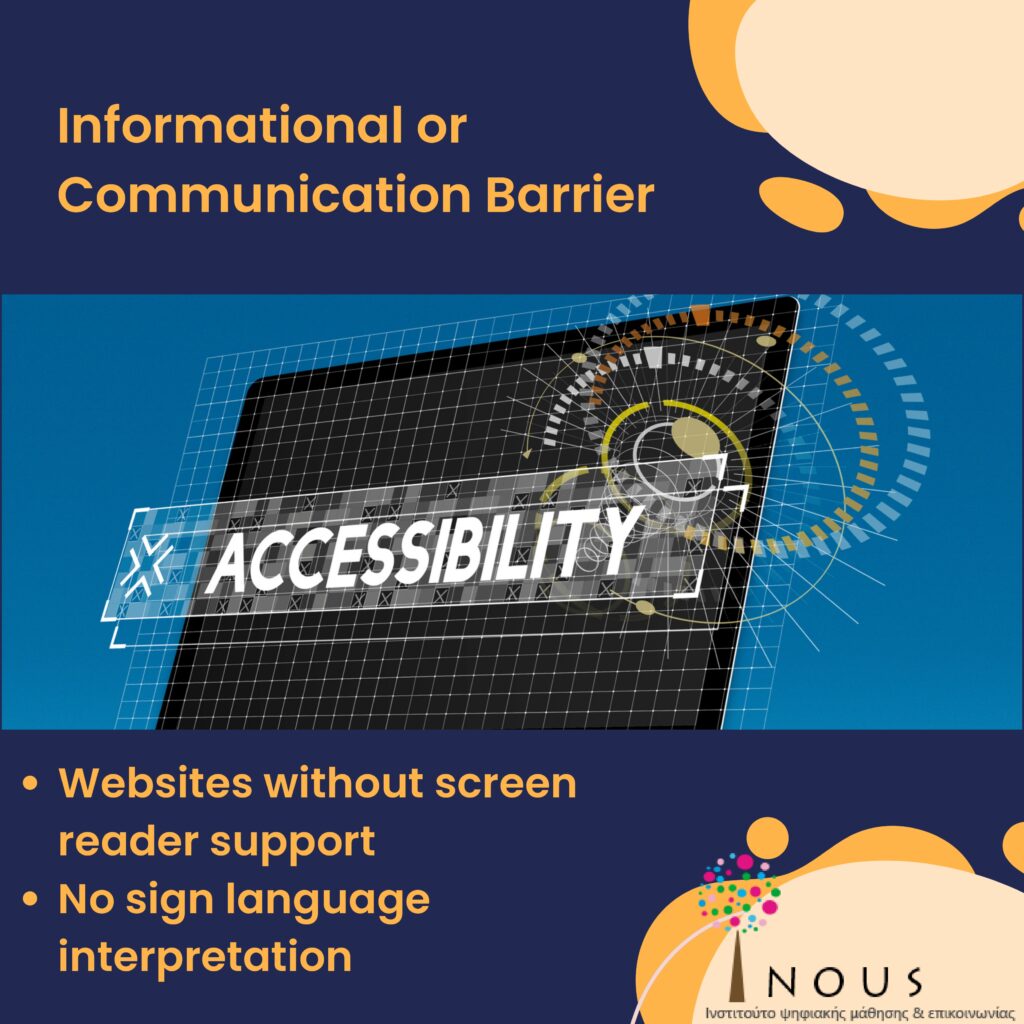
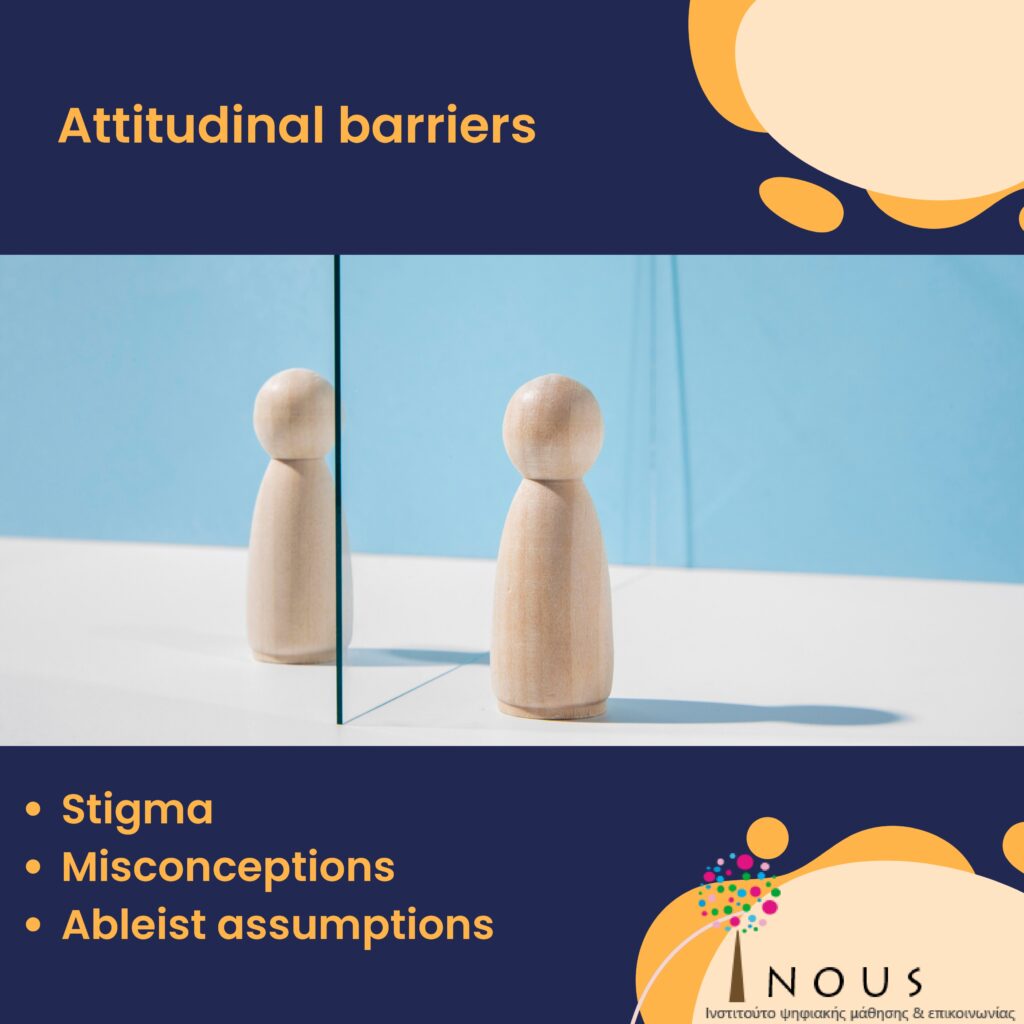
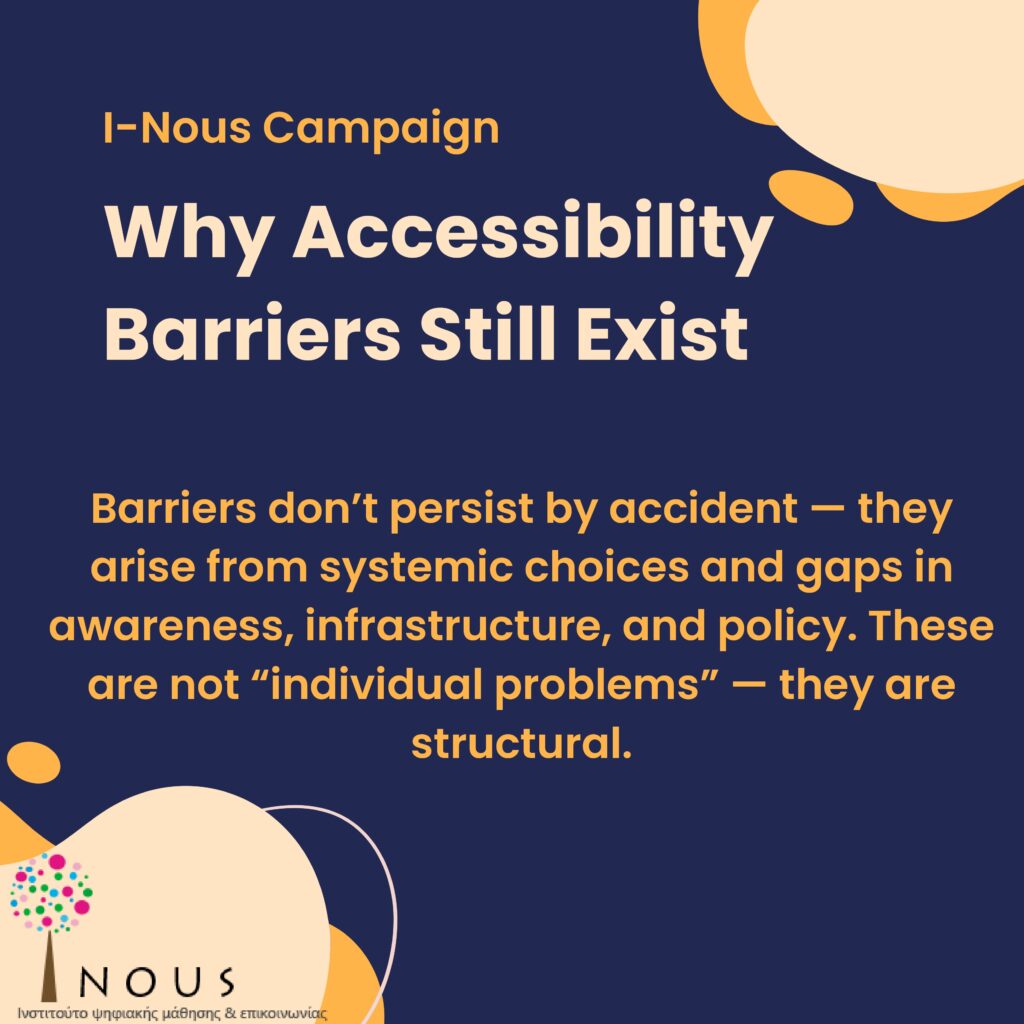
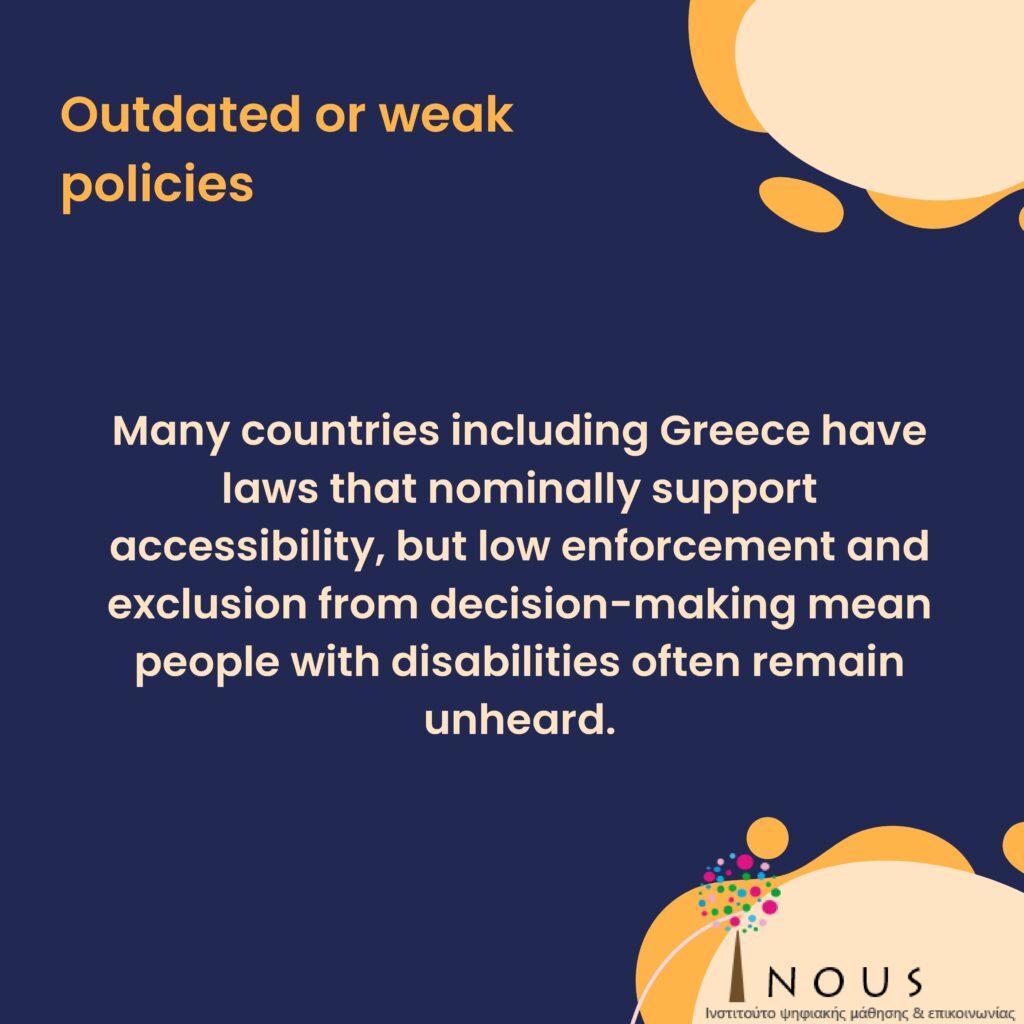
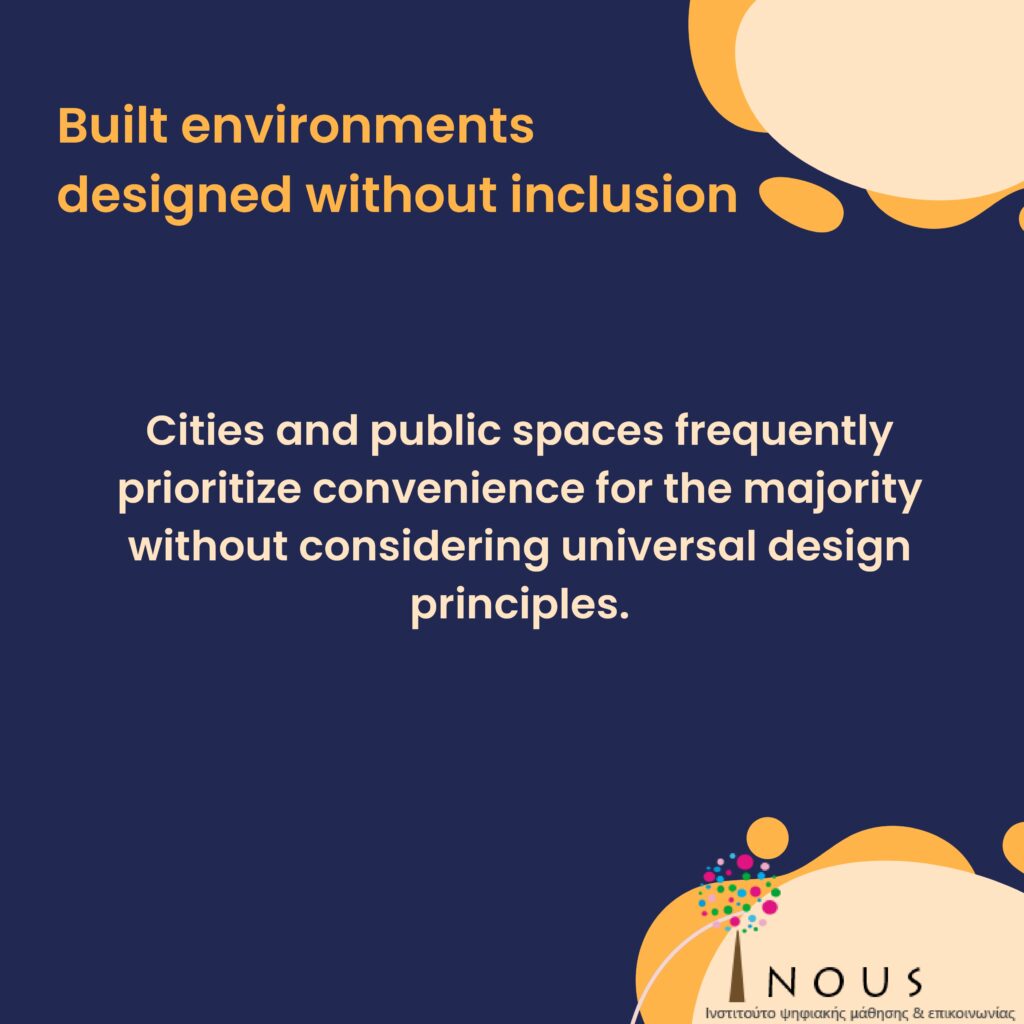
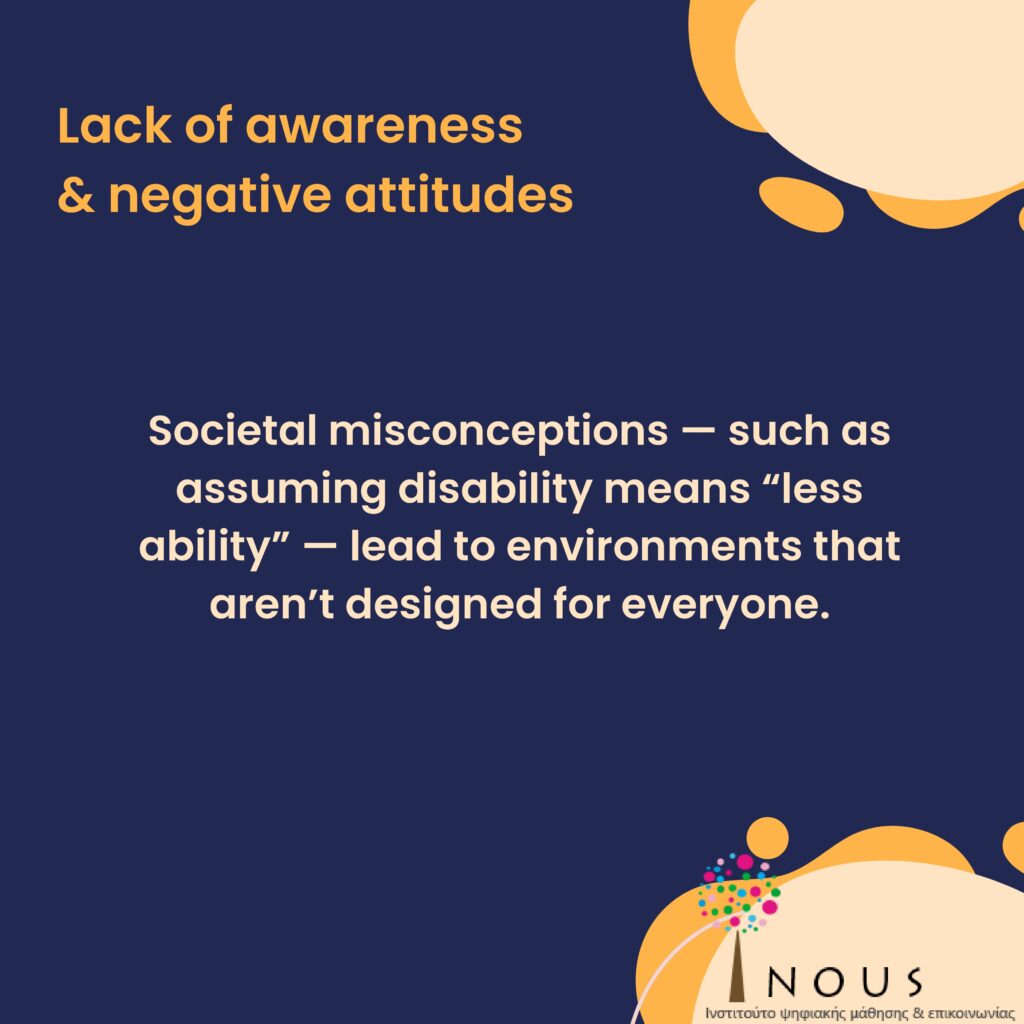
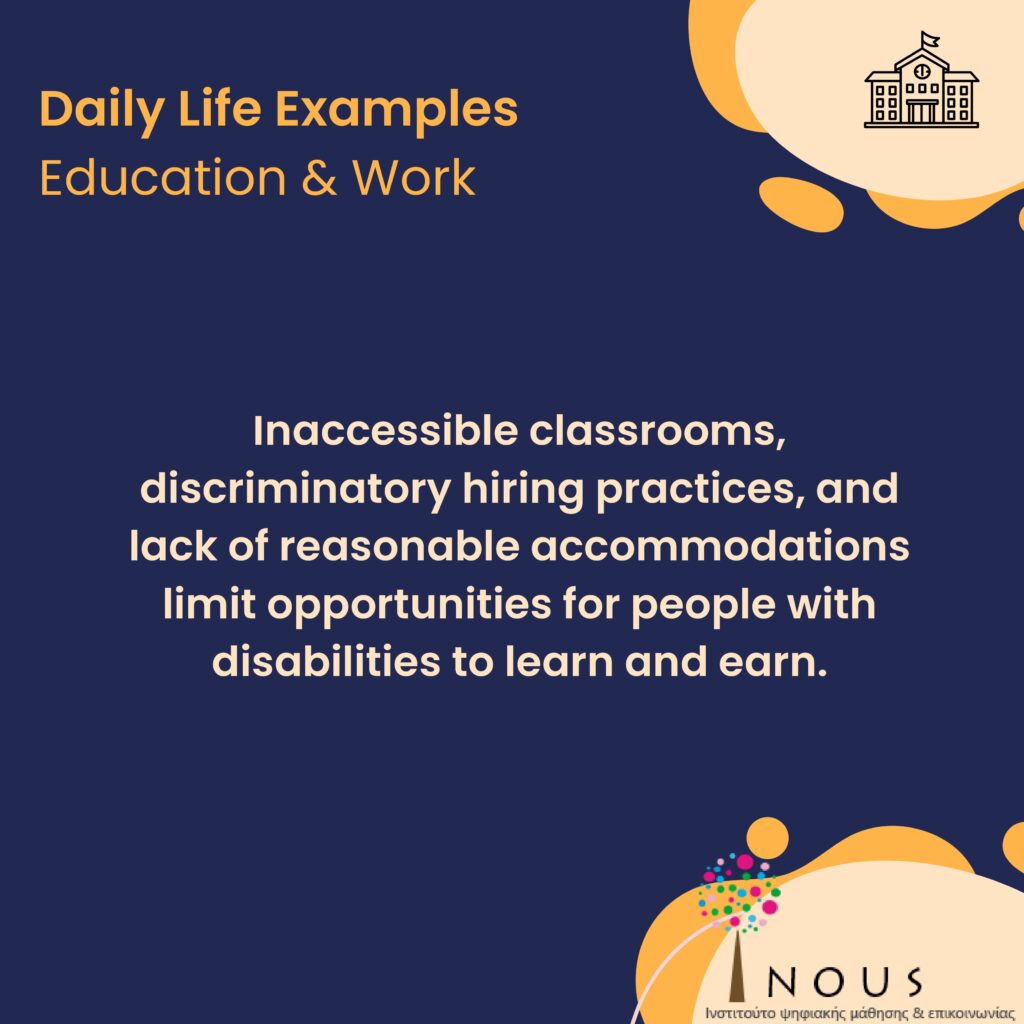
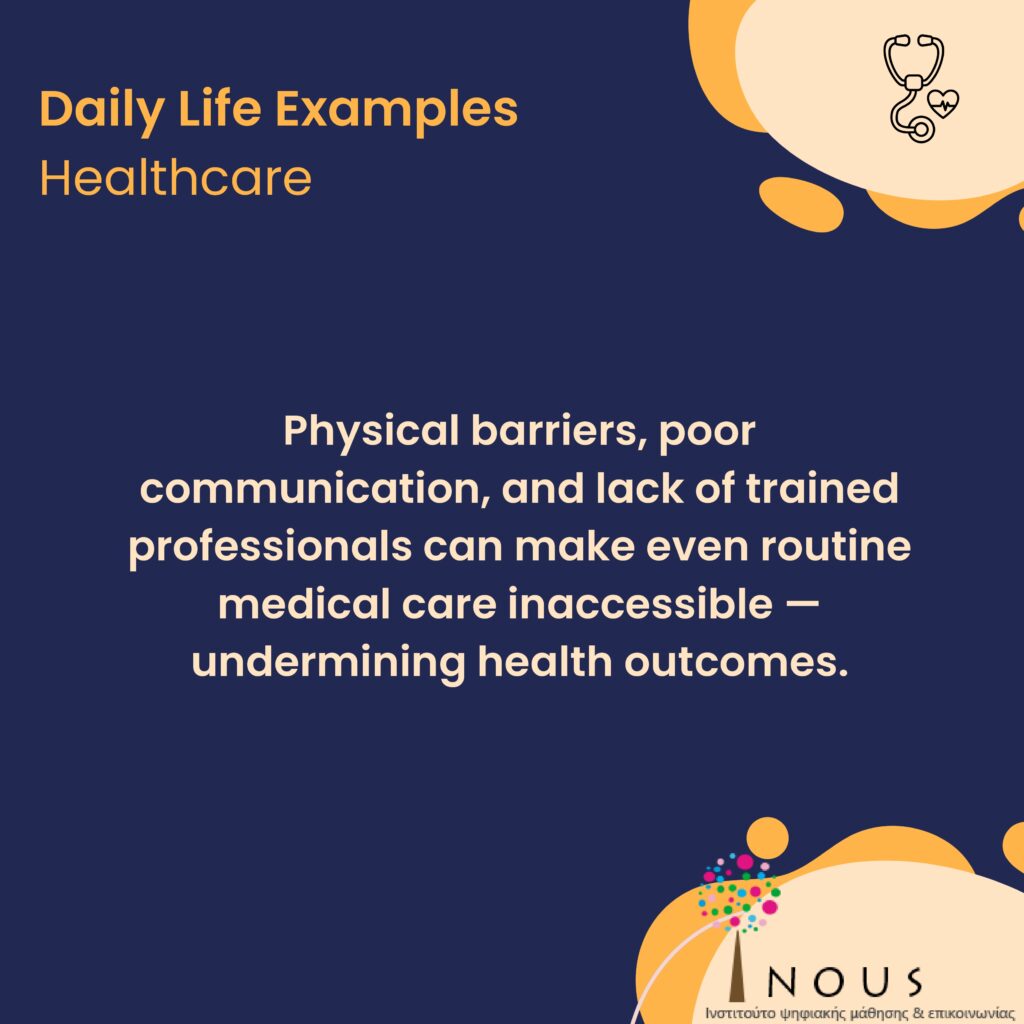
Social Media Campaign
Repeating Themes Across Regions
- Fragmented service delivery and lack of inter-ministerial coordination (Konstantinidou et al., 2022; National Confederation of Disabled People of Greece, 2019)
- Insufficient data collection and monitoring; lack of disability-disaggregated data (European Disability Forum, 2014; Strati, 2021)
- Limited awareness and training among public servants; disability often treated as a medical rather than social issue (Konstantinidou et al., 2022; European Agency for Special Needs and Inclusive Education, 2023)
- Urban-rural divide: Barriers are more severe in islands, mountainous, and rural regions (National Confederation of Disabled People of Greece, 2023).
Most Frequently Reported Barriers
Physical and Digital Accessibility
- Built environment
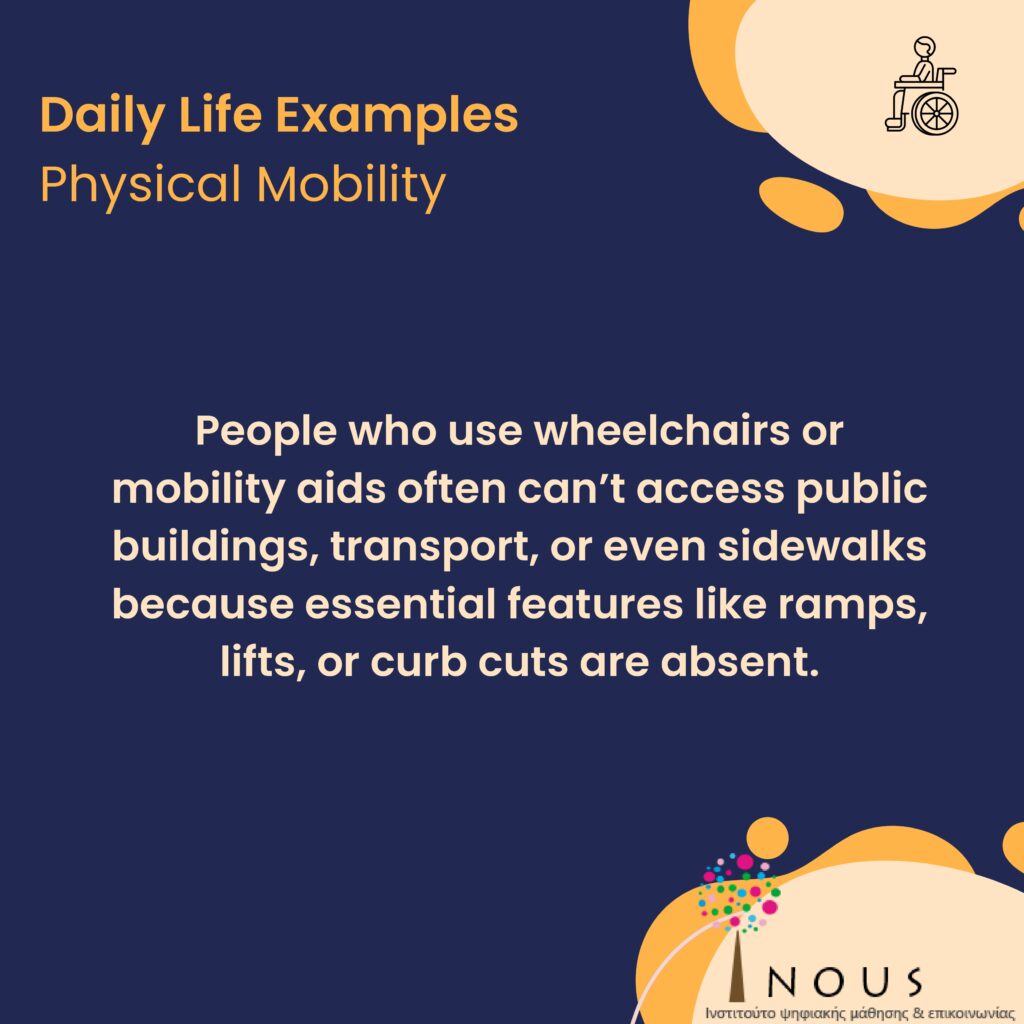
- Many public buildings, health centers and schools lack ramps, elevators, accessible toilets or signage (National Confederation of Disabled People of Greece, 2023; European Commission, 2023)
- Transport
- Intercity buses are not accessible. City buses are better but not universal (European Commission, 2023)
- Digital services
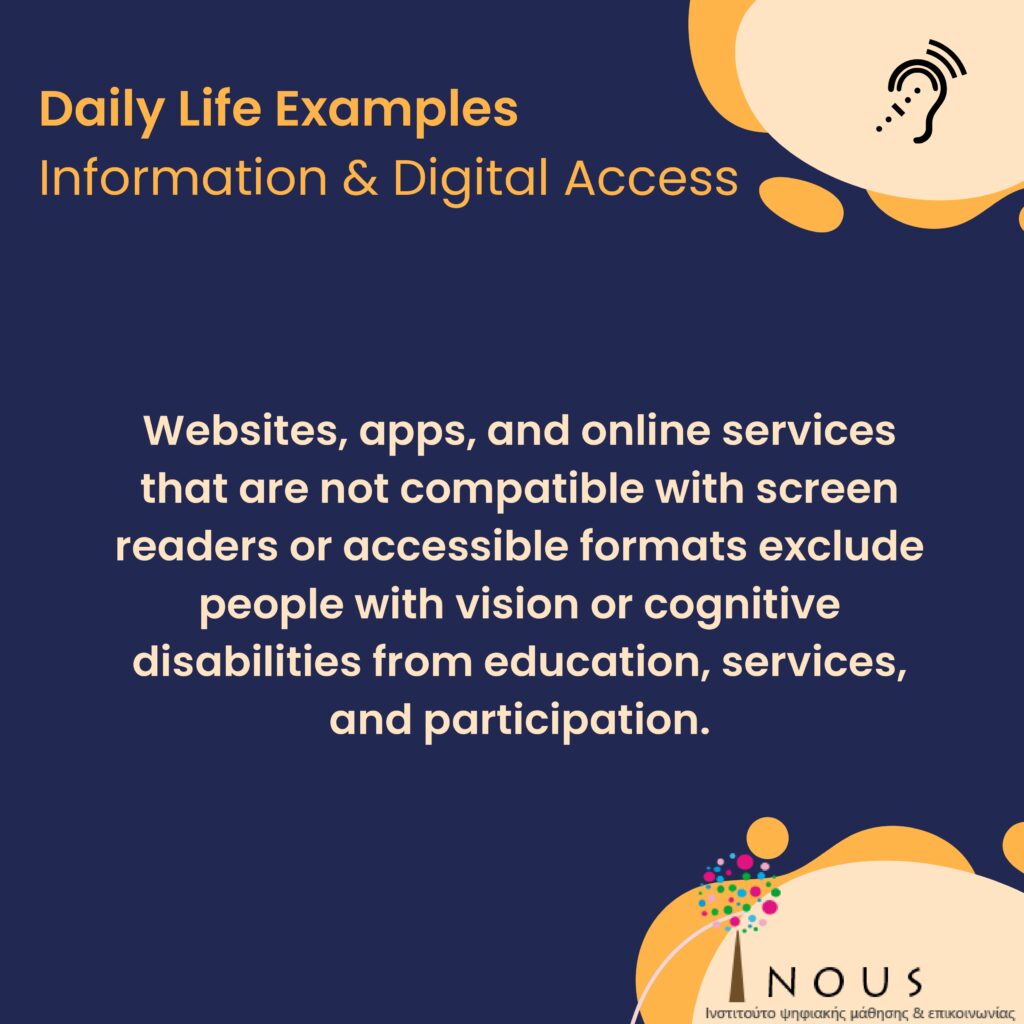
- E-health and e-government platforms often lack accessibility features.
- Digital illiteracy is a barrier (National Confederation of Disabled People of Greece, 2023).
Healthcare
- Unmet needs
- High rates of unmet medical, dental, rehabilitation and mental health needs due to cost, waiting lists, lack of specialists and inaccessible facilities (National Confederation of Disabled People of Greece, 2023)
- Out-of-pocket costs
- Many reduce spending on food/clothing to afford health needs
- 78% report cutting basic expenses for health (National Confederation of Disabled People of Greece, 2023)
- Specialist shortages
- Especially acute for rare diseases, neurological and psychiatric conditions (National Confederation of Disabled People of Greece, 2023).
Social Protection
- Complex, fragmented benefits system
- Multiple agencies, complex eligibility and frequent reassessments (Konstantinidou et al., 2022)
- Disability assessment
- Still largely medicalized, with inconsistent application and frequent reassessments even for irreversible conditions (Konstantinidou et al., 2022; National Confederation of Disabled People of Greece, 2019).
Education
- Segregation
- Many disabled students are in «inclusion» classes that are still physically or socially separate (European Agency for Special Needs and Inclusive Education, 2023)
- Staffing gaps
- Lack of trained teachers, aides and accessible materials (European Agency for Special Needs and Inclusive Education, 2023; Strati, 2021)
Employment
- Quota schemes exist but are rarely enforced in the private sector. Public sector hiring is slow and bureaucratic (Strati, 2021)
- Reasonable accommodation is often not provided or understood (Konstantinidou et al., 2022).
- Long-term unemployment is especially high for women and young disabled people (Strati, 2021).
Discrimination and Attitudes
- 36% of disabled people report experiencing discrimination in healthcare settings in the last two years (National Confederation of Disabled People of Greece, 2023)
- Women with disabilities face higher rates of discrimination and exclusion (European Disability Forum, 2014; National Confederation of Disabled People of Greece, 2023)
- Communication barriers: Lack of sign language, Braille or easy-to-read materials in public services (National Confederation of Disabled People of Greece, 2023)
Groups Most Excluded
- Women with disabilities
- Face double discrimination in employment, healthcare and social protection (European Disability Forum, 2014; Strati, 2021; National Confederation of Disabled People of Greece, 2023)
- Children and youth with disabilities
- Higher rates of early school leaving, lower tertiary education completion, and limited access to inclusive education (Strati, 2021; European Agency for Special Needs and Inclusive Education, 2023)
- People with intellectual, psychosocial, and rare
diseases
- More likely to be institutionalized, lack access to community-based services, and face communication barriers (National Confederation of Disabled People of Greece, 2023; Konstantinidou et al., 2022)
- Uninsured and low-income disabled people
- Higher unmet health needs and worse self-reported health (National Confederation of Disabled People of Greece, 2023).
Regional Disparities
- Islands and mountainous regions (Aegean, Ionian, Epirus, Western Macedonia) report the highest rates of unmet needs, lack of specialists, and poor accessibility (National Confederation of Disabled People of Greece, 2023)
- Urban centers (Attica, Central Macedonia) face long waiting lists and overcrowded hospitals (National Confederation of Disabled People of Greece, 2023)
Recommendations
Policy and Governance
- Strengthen inter-ministerial coordination and monitoring of disability policies (Konstantinidou et al., 2022; National Confederation of Disabled People of Greece, 2019)
- Implement and enforce accessibility standards for all new and existing public infrastructure, including digital services (European Commission, 2023; National Confederation of Disabled People of Greece, 2023)
- Simplify and harmonize disability assessment and benefits; move toward a social model (Konstantinidou et al., 2022; National Confederation of Disabled People of Greece, 2019)
Healthcare
- Increase funding for public health and reduce out-of-pocket costs for disabled people (National Confederation of Disabled People of Greece, 2023)
- Expand specialist services in rural/island regions and for rare/complex conditions (National Confederation of Disabled People of Greece, 2023)
- Ensure accessible information and communication in all health settings (sign language, Braille, easy-to-read) (National Confederation of Disabled People of Greece, 2023)
Education
- Invest in inclusive education
- More trained staff, accessible materials, and support for mainstreaming (European Agency for Special Needs and Inclusive Education, 2023; Strati, 2021)
- Monitor and address early school leaving among disabled youth (Strati, 2021).
Employment
- Enforce public and private sector quotas and provide incentives for hiring disabled people (Strati, 2021)
- Promote reasonable accommodation and anti-discrimination training for employers (Konstantinidou et al., 2022)
Social Protection
- Ensure adequacy and coverage of disability benefits; address gaps for uninsured and low-income groups (Konstantinidou et al., 2022; National Confederation of Disabled People of Greece, 2023)
- Develop a national database for disability-disaggregated data to inform policy (European Disability Forum, 2014; Strati, 2021)
Targeted Actions
- Prioritize women with disabilities in all policies and monitor intersectional discrimination (European Disability Forum, 2014; National Confederation of Disabled People of Greece, 2023)
- Expand community-based services and deinstitutionalization, especially for intellectual and psychosocial disabilities (Konstantinidou et al., 2022; National Confederation of Disabled People of Greece, 2019)
European Benchmarks and Best Practices
Disability in Higher Education: European Trends and Benchmarks
- 19% of students in Europe report that their studies are limited by a disability, functional limitation or health problem (Hauschildt et al., 2021)
- 26% of students in Europe report serious or very serious financial difficulties, with students with disabilities facing additional costs for assistive technology, transportation and personal support (Hauschildt et al., 2021).
- Less than 1% of mobile students in Europe are students with disabilities, despite targeted support in programs like Erasmus+ (European University Association, 2022)
- 159 higher education institutions in 36 European systems report that diversity, equity, and inclusion (DEI) are now strategic priorities, but implementation varies widely (European University Association, 2022)
- The main barriers to effective DEI strategies are lack of funding, insufficient data and fragmented support services (European University Association, 2022)
- Up to 20% of the population is neurodivergent, but universities across Europe are not systematically meeting their needs (European University Association, 2024)
Best Practices and Recommendations for Greece
- Adopt a National Strategy for Inclusive Mobility
- Set measurable targets for the participation of students with disabilities in Erasmus+ and other mobility programs, following the example of Austria and Belgium (European University Association, 2022)
- Strengthen Institutional DEI Policies
- Require all universities and public sector bodies to develop and publish DEI strategies, with annual reporting on progress and outcomes (European University Association, 2022)
- Invest in Data Collection
- Establish a national database for disability-disaggregated data in higher education and public sector employment, to inform policy and monitor progress (European Disability Forum, 2014; Strati, 2021)
- Expand Support Services
- Increase funding for accessible infrastructure, assistive technology and personal support in universities and public services (BMBF, 2024; European University Association, 2022)
- Promote Digital and Neurodiversity Inclusion
- Ensure that digital platforms, e-learning and public sector websites are accessible and usable for all, including neurodivergent individuals (European University Association, 2024)
- Engage Disabled People’s Organizations
- Involve students and employees with disabilities in the design, implementation and evaluation of policies and services (European University Association, 2022)
References
- BMBF (2024) Inclusion Policy. Federal Ministry of Education and Research, Germany.
- European Agency for Special Needs and Inclusive Education (2023) Country System Mapping Country Report: Greece.
- European Commission (2021) Strategy for the Rights of Persons with Disabilities 2021–2030. Brussels: European Commission.
- European Commission (2023) EL AccessibleEU Accessibility Indicators 2023 Report. Brussels: European Commission.
- European Disability Forum (2014) EDF Alternative Report on the Implementation of the UN Convention on the Rights of Persons with Disabilities.
- European University Association (2022) Diversity, Equity and Inclusion in European Higher Education Institutions.
- European University Association (2024) Equity, Diversity, Inclusion & Belonging.
- Hauschildt, K., Vogtle, E.M., Gwosc, C., Schirmer, H. & Cras, F. (2021) EUROSTUDENT VIII Synopsis of Indicators 2021–2024.
- Konstantinidou, D., Capella, A., Spyropoulou, N. & Vezyrgianni, K. (2022) ESPN Thematic Report on Social protection for people with disabilities – Greece. European Social Policy Network (ESPN), Brussels: European Commission.
- National Confederation of Disabled People of Greece (2019) Human Rights and Persons with Disabilities – Alternative Report of Greece 2019 (final version) and response to the List of Issues For the 22 Session (August 26 – September 20).
- National Confederation of Disabled People of Greece (2023) National Disability Observatory Survey.
- Strati, E. (2021) European Semester 2020–2021 country fiche on disability equality – Greece. Brussels: European Commission, Directorate-General for Employment, Social Affairs and Inclusion.